Your insoles going flat means they were just not built for you.

Standard insoles are engineered for a 150-lb body. If you weigh more, they're dead within weeks. No matter how expensive they are.
★★★★★ Rated 4.9 by 1,972+ customers · 180-day money-back guarantee
A Story You Know:
He spent $120 on insoles last year. All of them lasted less than three weeks.
Marcus works construction. Ten-hour days. Concrete, steel, asphalt. By 2pm his knees hurt. By 5pm, his lower back locks up. He's tried everything — gel insoles, memory foam, "heavy duty" pharmacy brands, expensive orthopedic options. Same result every time.
They'd feel decent for a few days. Then the arch collapses, the cushion flattens, and the pain creeps back. He thought it was his weight. His doctor told him the same thing.
"The problem was never Marcus. The problem was that every insole on the market was engineered for someone who weighs 60 lbs less than him."
At 280 lbs, Marcus puts 73% more compressive force through his insoles with every single step. Standard foam was never rated for that load. It was only a matter of time before it gave out.
Why every insole you've tried has failed
If you weigh over 200 lbs and have tried any of these, here's the real reason they didn't work. And it's not you.
Gel insoles from the pharmacyCompressed into nothing within days. Gel disperses force but doesn't hold structure under heavy load.
Memory foam insolesMolded to your foot once, then stopped bouncing back entirely. Not rated for repeated impact above 170 lbs.
"Heavy duty" drugstore brandsThe label says heavy duty. The foam inside is still standard 25–30 kg/m³. It's marketing, not engineering.
Expensive athletic insolesEngineered for runners at peak performance, not for people carrying 250 lbs through a 10-hour shift.
Custom orthotics$350, a 6-week wait, and calibrated for posture correction, not load capacity. They still use standard-density foam.
Just buying new shoesThe midsole foam in most shoes has the same weight ratings as insoles. More money, same physics, same result.
73%
More compressive force per step at 280 lbs vs. a 160-lb design load
3-5
weeks until standard foam permanently compresses under 250+ lbs of daily use
0
Standard insoles on the market that list a weight rating on the box
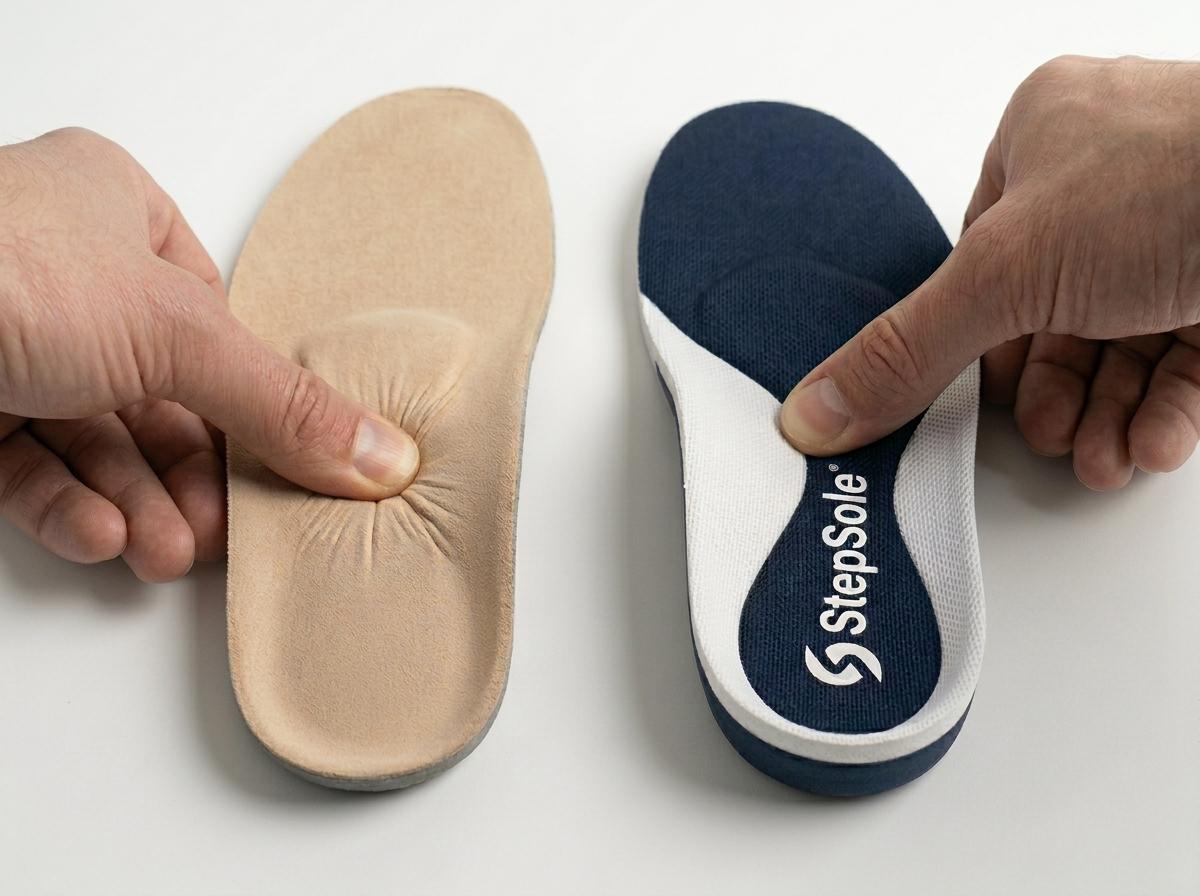
The StepSole difference
Not more cushioning. Not a different shape. The same insole concept, finally built to the correct load specification for your body.
High-density load-rated foam
Standard EVA foam sits at 25–30 kg/m³. StepSole uses 48–65 kg/m³ high-density PU foam, rated for 200–400 lbs. Higher density means it resists collapse stress and holds its structure for 12+ months of daily use.
18mm deep heel cup
Standard insoles use a 10–12mm heel cup. Ours is 18mm, distributing heel strike across the full heel surface rather than concentrating impact at a single pressure point.
Structural TPU base shell
A rigid thermoplastic polyurethane shell sits beneath the foam layer. It provides structural support independent of the foam, dramatically extending lifespan and maintaining arch height under load.
Calibrated arch for 200–400 lbs
The arch geometry is engineered not to flatten under your actual load. Most insole arches collapse under 240 lbs within weeks. StepSole's holds through 12 months, backed by guarantee.
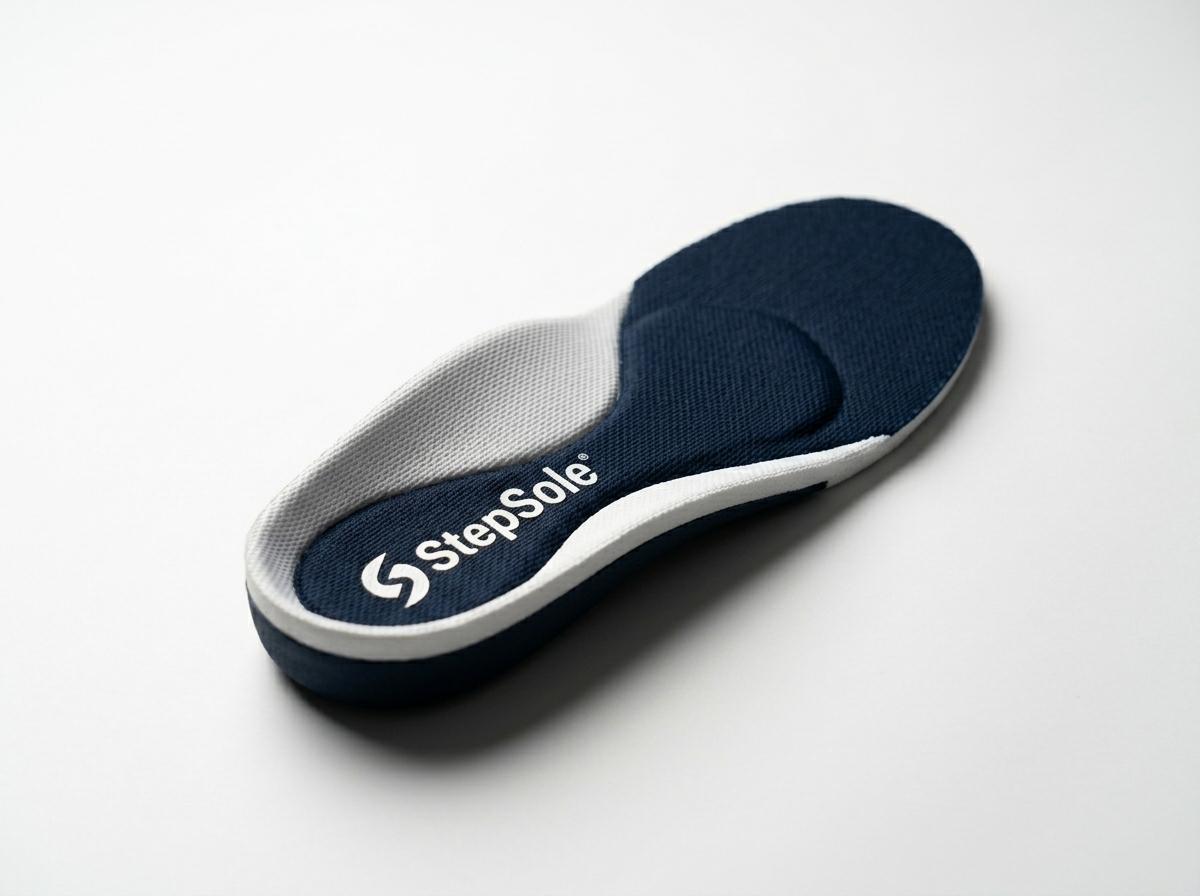
How StepSole compares
The numbers tell the story.
| Feature | StepSole | Standard insole |
|---|---|---|
| Foam density | 48–65 kg/m³ | 25–30 kg/m³ |
| Weight rating | 200–400 lbs | Not rated |
| Heel cup depth | 18mm | 10–12mm |
| TPU structural shell | ✓ Included | ✕ None |
| Lifespan at 260 lbs | 12+ months | 2–4 weeks |
| Guarantee | ✓ 180-day | ✕ None |
From people who weigh what you weigh
★★★★★ Rated 4.9 by 1972+ customers
"I work warehouse, 50–60 hours a week on concrete. I've gone through probably 8 pairs of insoles this year alone. Put StepSoles in on a Monday. By Friday I realized I hadn't thought about my feet once. I'm 295 lbs. Nothing has lasted more than two weeks before. These are now three months in and still exactly the same."
"My surgeon told me I needed knee surgery. A friend told me to try these first. Two months later the knee pain is down maybe 70%. I'm 310 lbs. These are the only ones that haven't gone flat."
"I made it through the entire holiday season on my feet at work without sitting down mid-shift once. First time in three years."
"I'm a nurse. I've tried every insole on this planet. My feet would be burning by hour six no matter what I wore. I bought StepSoles skeptically. Made it through a 12-hour shift without sitting once. I weigh 268 lbs and I've never found anything that actually holds up for someone my size."
"I was so skeptical. I've spent probably $200 this year on insoles that all failed. My husband thought I was wasting money again. Two months later he asked me where I bought them because he wants a pair. I weigh 280 lbs. These are the only insoles I've ever used that I haven't had to replace."
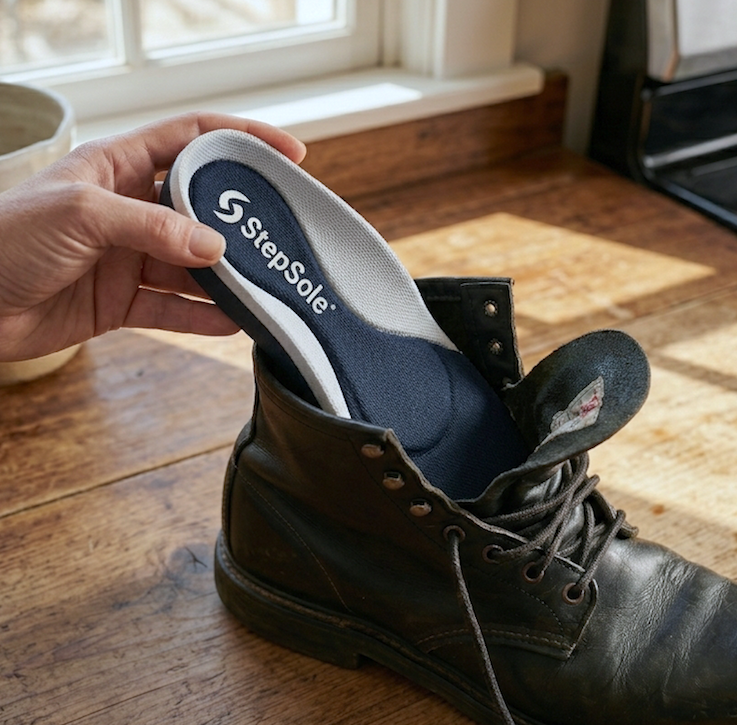
How it works
Remove your old insole. Drop this one in.
That's it. Trim to fit if needed. Works in work boots, sneakers, and most casual shoes. Takes 30 seconds.
Before you buy
-
Most "heavy duty" insoles use the exact same 25–30 kg/m³ foam as regular insoles — it's a label, not an engineering specification. StepSole uses 48–65 kg/m³ high-density PU foam with a structural TPU shell beneath it. That's a physically different material under your foot, not a different marketing claim. The foam compression test shows the difference in under 10 seconds.